
Do you sometimes struggle to support certain refugee clients and wonder why?
You leave illustrated instructions for them to follow, or notes in their own language, but they don’t act on them, leaving you at a loss.
Worldwide, only 60% of refugees are literate. It could be that your client doesn’t know how to read or write.
In this unique workshop you will learn to identify clients who are not fully literate and work with them more successfully.

Picture the scene. It is your second session with a client who needs to claim Universal Credit. Last time you filled in the form with him, explained the next steps – which the interpreter noted down in his native language – and showed him the Job Centre on Google maps.
This time nothing has moved forward. He shows you some text messages he has received and you see that he was invited to an appointment, which he has missed. There is a risk that his UC claim is going to be closed down.
This is frustrating. After all your hard work, will you need to start again?
Only 60% of adult refugees are literate
(according to a 2022 report by UNESCO).
Many refugees are Students with Limited or Interrupted Formal Education (SLIFE). Some people share this fact openly, others hide their literacy problems due to stigma. In this workshop we share common indicators of low literacy, and tips for sensitive conversations which build trust.
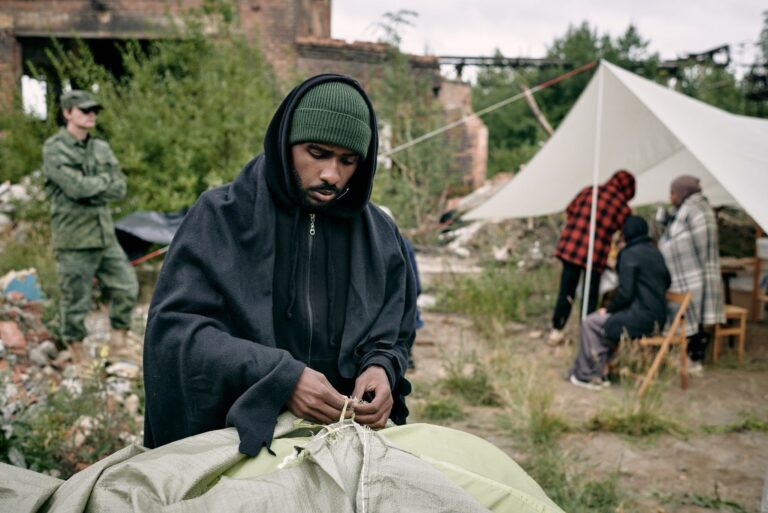
Students with Limited or Interrupted Formal Education (SLIFE) require a different kind of support from their case workers. It’s hard for them to understand UK systems, take in what you tell them, and remember it. Because we live in a world which assumes everyone can read, it’s hard for them to take independent action. Your translated resources are of little use.
How can you reduce your client’s reliance on you and help them become more self-sufficient? In this workshop you’ll discover strategies, resources and technologies that you can use to support them to navigate life in the UK.
"There really isn't anything like this available as far as I am aware. Lots of really practical tips, this training session will equip support staff in many different roles and make the experience of service users so much better. Highly recommended."
South West Councils
This practical workshop is for everyone who works in a supportive role with migrants. For example resettlement teams, key workers, housing teams and ESOL practitioners (English for Speakers of Other Languages.)
This is a 2-hour course available online or face-to-face.
If you’re an ESOL practitioner, ask about the version of this workshop we have developed just for you. It has more of a focus on classroom outcomes.

I’m the founding director of English Unlocked. My previous career was teaching English to Speakers of Other Languages. For 25 years I taught English to people from around the world, some of whom could not read or write confidently in their own language.
Joshua is a Refugee Resettlement Team Leader and an expert in Refugee and Migrant Personal Finance. In 2018 a refugee that he was supporting revealed that he could not read or write his first language. Joshua began to explore strategies to help this young man become more self-sufficient, strategies he shares in this unique course.
Contact us now to request a price list and further information. In your email, let us know whether it is for a group or just one person – we’ll reply as soon as we can.
Do you know how you sound to non English speakers? Find out on our communication skills course, and learn how to be more easily understood.
Please complete the form below, and we will be in touch to discuss your training requirements.